WHEN TIMBER STRUCTURES FIND THEIR WAY INTO VIETNAM'S BUILDINGS
On September 23 in Hanoi, two specialist workshops co-organized by TranDuc Corporation and the Institute for Building Science and Technology (IBST) connected a single through-line: from standards, materials, and design through to manufacturing and application — the foundations needed for Mass Timber to progressively enter real-world construction in Vietnam.
Vietnam has already developed the capability to produce engineered timber components such as CLT and Glulam. But the distance between a component leaving the factory and a structural system appearing on a drawing and being deployed on site remains real: what is the design basis, what data exists for verification, and what standards framework can all parties work from?
These were the questions running through both programs on September 23.
In the morning at IBST, the international scientific workshop "Timber Structures in Construction — Standards, Applications and International Experience" brought together seven presentations from Dr. Nguyen Hong Hai, Dr. Vu Thanh Trung, and Dr. Do Tien Thinh from IBST; Dr. Doan Thi Bich Ngoc from the Forest Industry Research Institute; Andrea Stocchero — Director of Structural Products, SEQUAL (New Zealand); Yamaoka Yoshihiko — Director of International Business Strategy, Life Design Kabaya (Japan); and Architect Nguyen Huy Hien — Technical Director, TranDuc Corporation. Topics spanned material strategy, design standards, durability, fire safety, and real-world application experience.
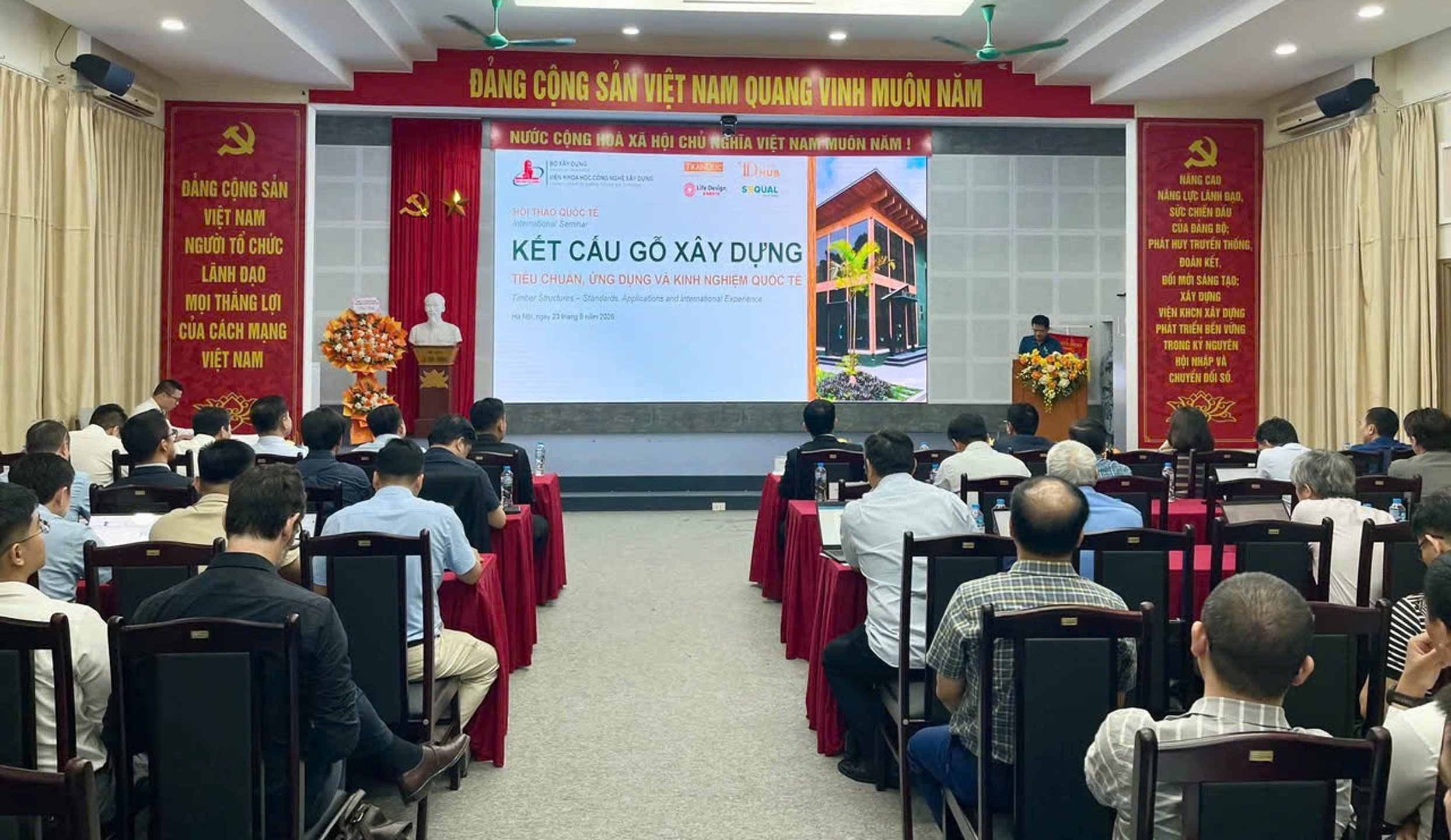 The international scientific workshop "Timber Structures in Construction — Standards, Applications and International Experience" brought together seven presentations from experts representing Vietnam, New Zealand, and Japan
The afternoon session, "Mass Timber — Building the Future of Green Construction: From Vision to Timber Structure Standards," extended the discussion with Douglas Snyder — CEO of the Vietnam Green Building Council (VGBC) — alongside Dr. Do Tien Thinh, Andrea Stocchero, Yamaoka Yoshihiko, and Architect Nguyen Huy Hien. Where the morning session focused on the foundations for timber structures to be designed and verified, the afternoon addressed the challenge of connecting standards, raw materials, manufacturing, and application so that a design can actually become a building.
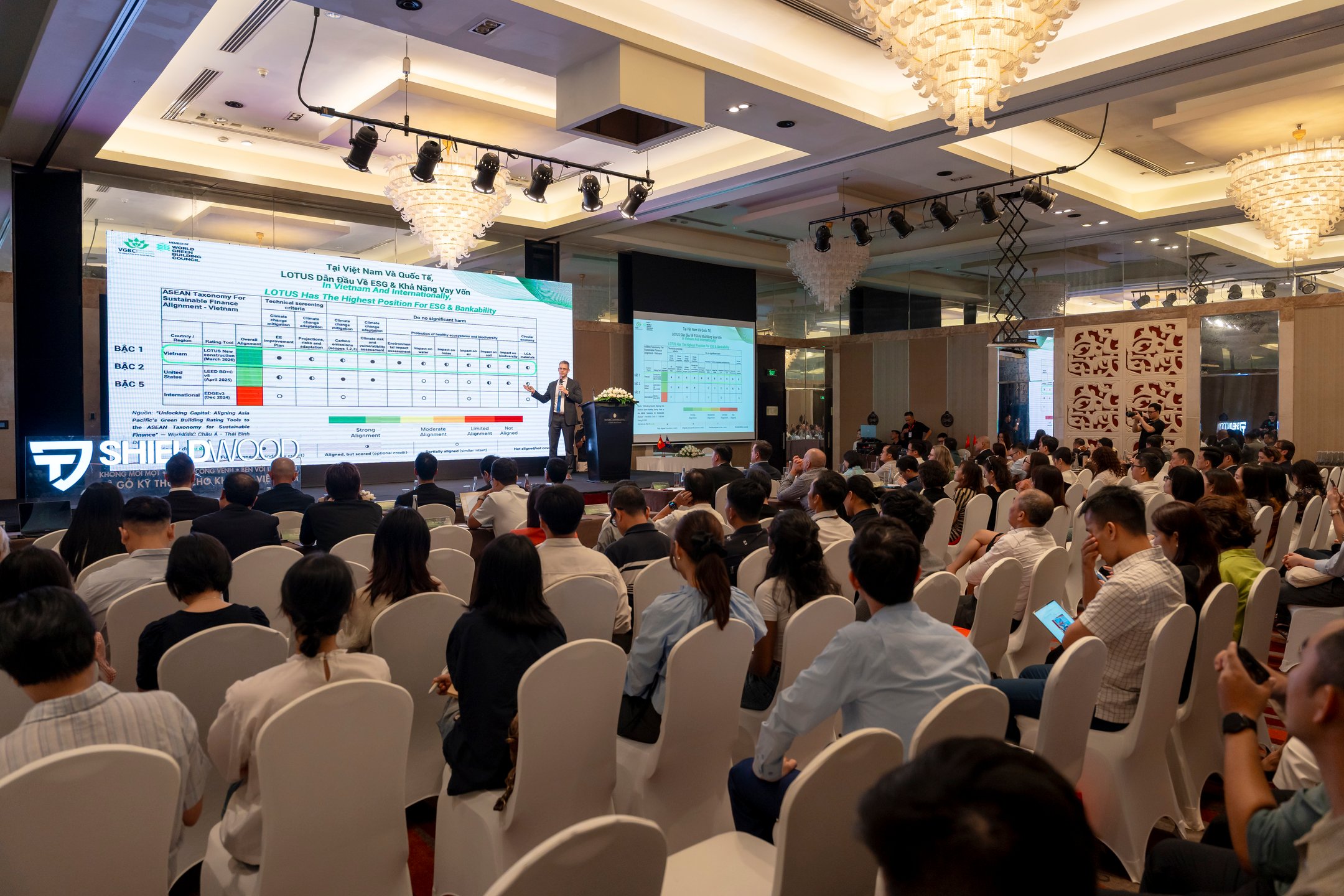 The afternoon session focused on closing the gap between the capability to "produce" components and the ability to "build" real structures
The two workshops were therefore not two separate stories — they worked together toward an answer to the gap between "can be produced" and "can be built."
From Production to a Standards Foundation
One of the central topics of September 23 was the progress on two national timber structure design standards — covering general building requirements and fire-resistant design — being developed by TranDuc in cooperation with IBST, expected to be submitted for review and published in 2027.
In parallel with standards development, mechanical and fire performance testing of SIP panels has been completed; GLT and CLT are the next steps. The goal is not only to produce components, but to progressively build the data that architects, engineers, and technical specialists need to design, calculate, and verify. Because with timber structures, the key questions are not simply "does wood burn?" or whether the material is sufficiently durable — what matters more is whether those properties are understood, measured, and translated into parameters that can be used in design.
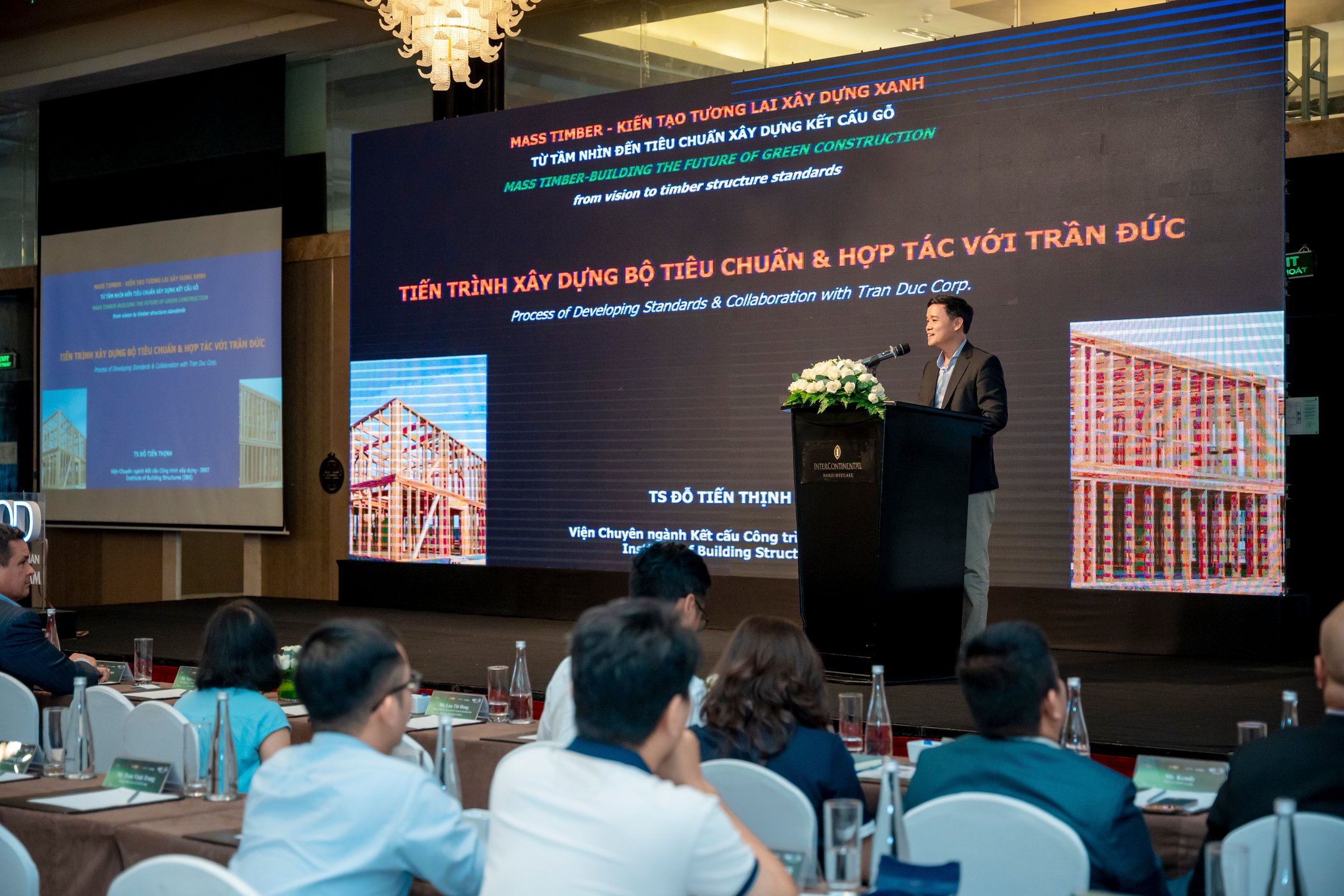 The IBST representative presented the upcoming research and standard appraisal contents
Insights from Japan, New Zealand, and Vietnam at the workshops also highlighted that standards must reflect real conditions of use — from fire safety to humidity, termite resistance, and long-term durability in tropical climates.
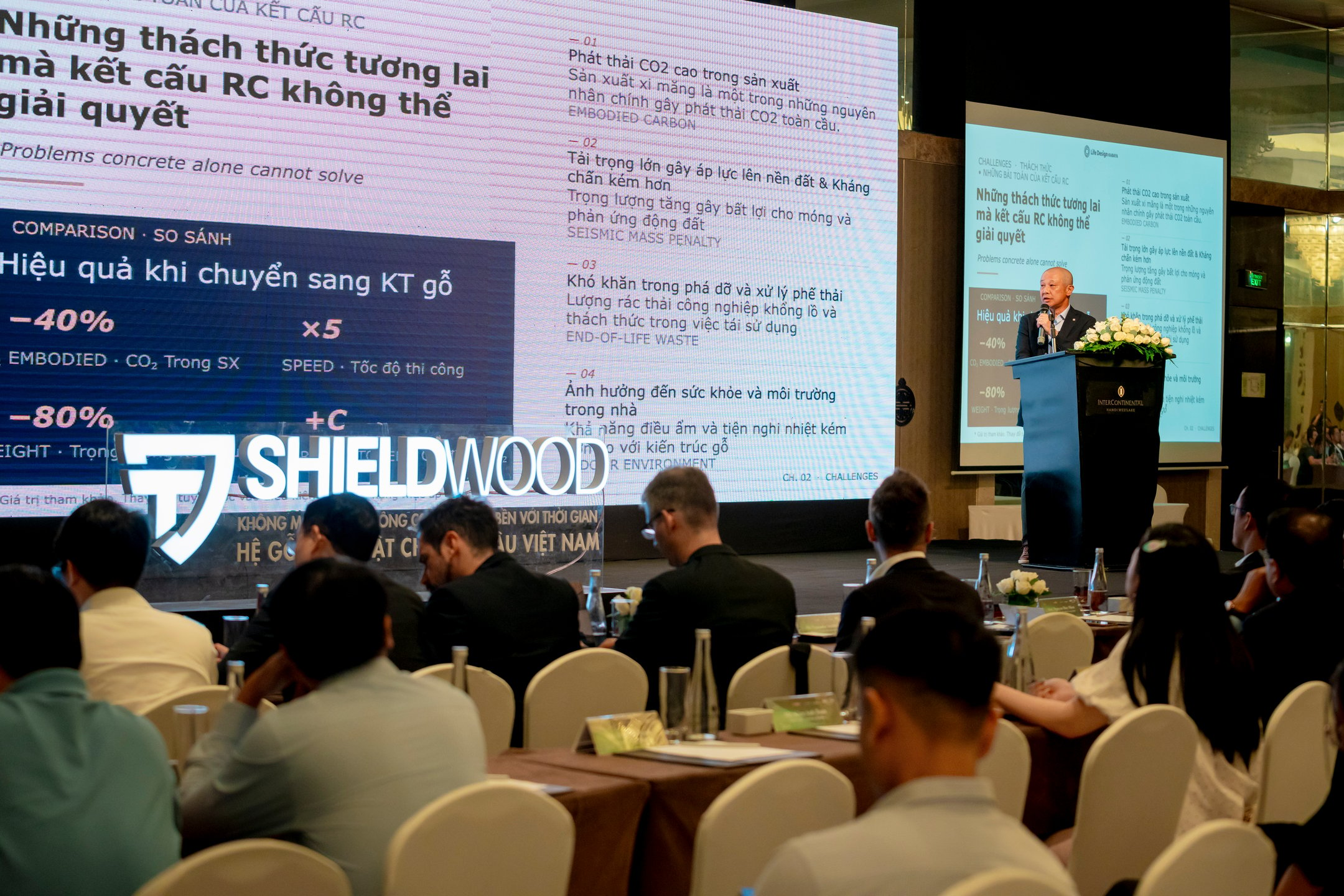
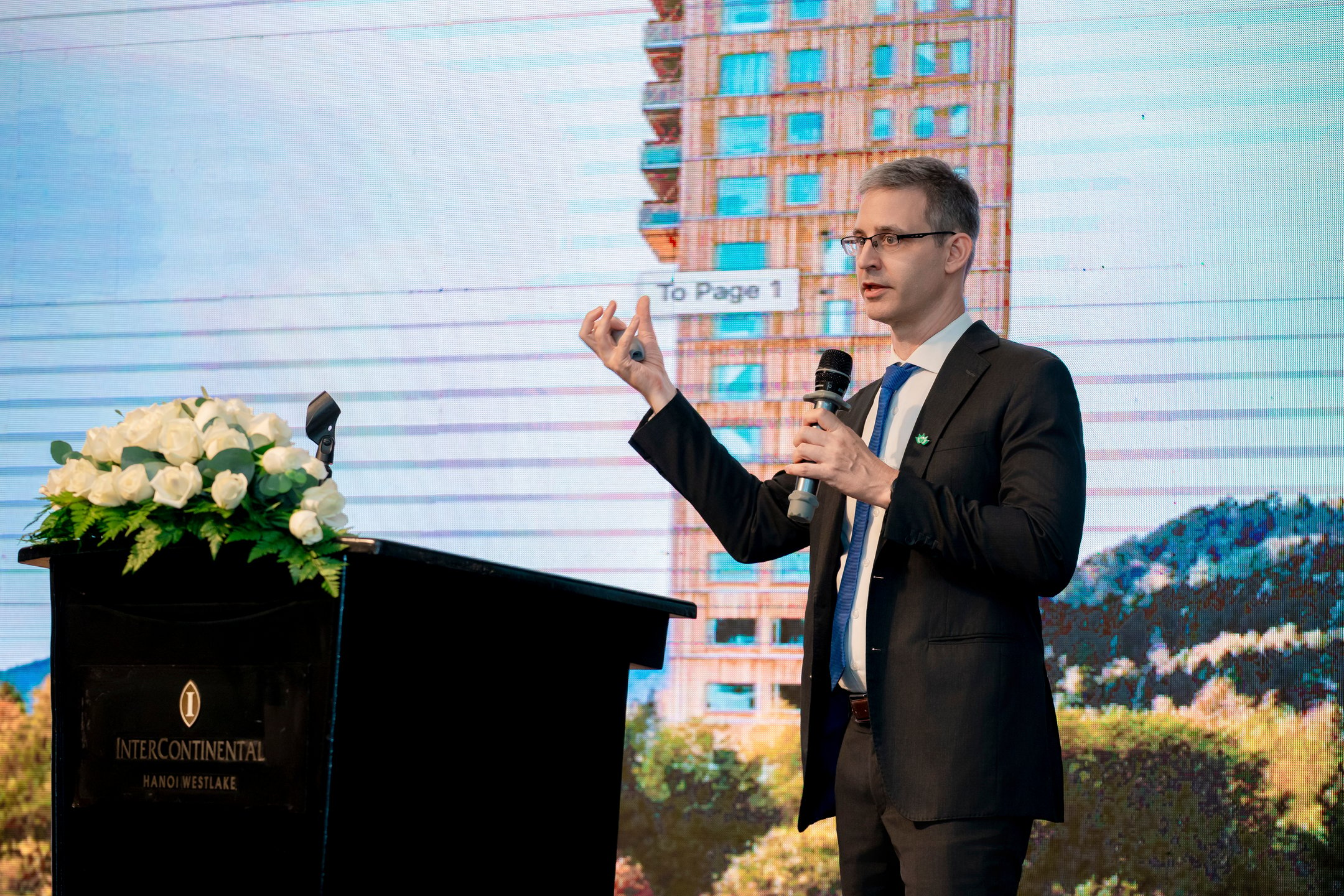
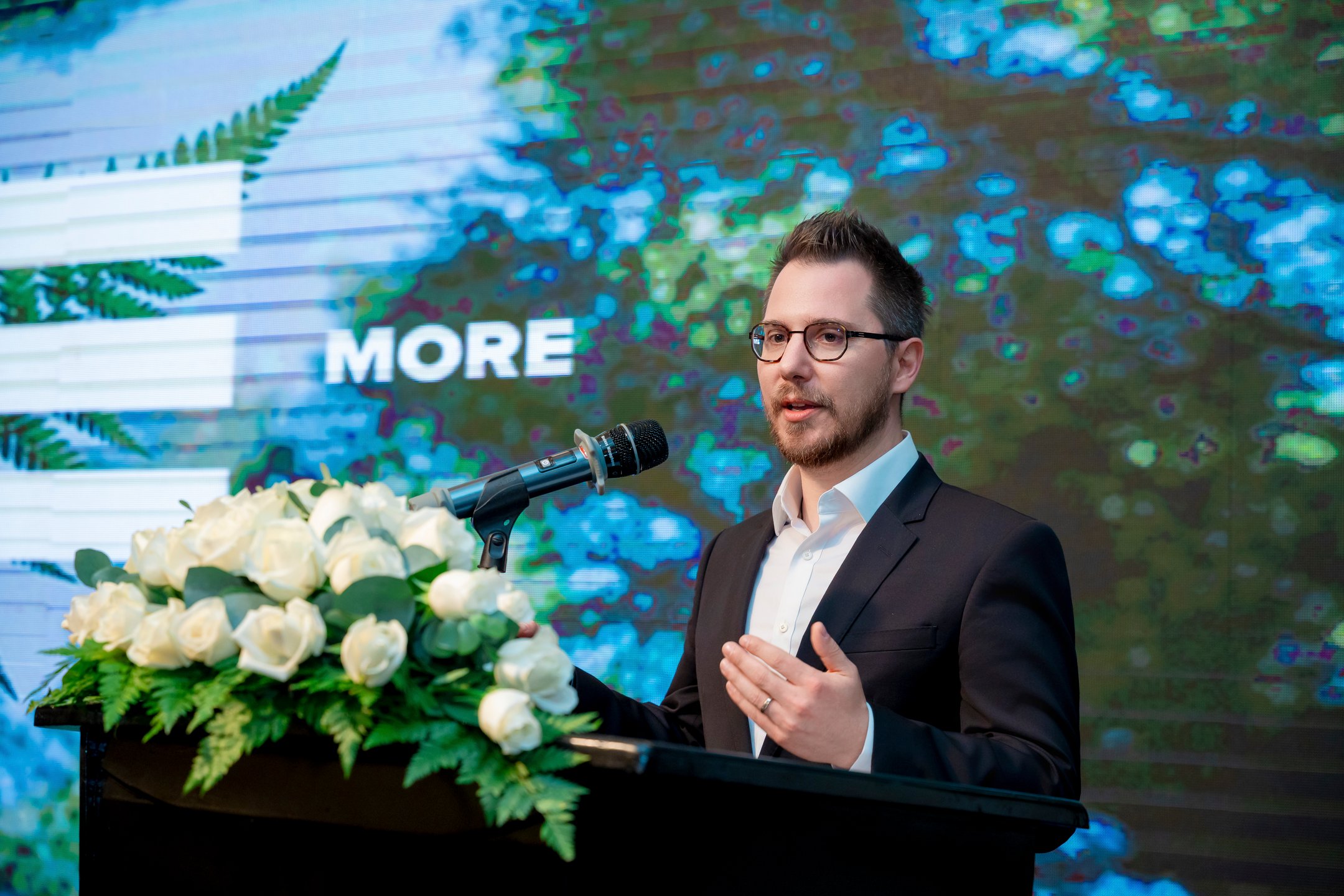 Experts discussed integrating standards, materials, and production to bring green timber structures into construction practice
TD Tech Hub: Connecting the Links for Mass Timber to Enter Buildings
Standards and production capability alone are not enough to bring a Mass Timber building into existence.
Upstream of the factory is the raw material supply; downstream are architects, engineers, fire safety specialists, technical reviewers, contractors, and developers. The ability to connect these links therefore becomes an important part of the application challenge.
At the event, TD Tech Hub continued to expand as a platform connecting raw material supply, research, design, standards, manufacturing, and Mass Timber application. SEQUAL (New Zealand) officially joined TD Tech Hub and signed a strategic cooperation agreement with TranDuc, adding raw material capability to the existing network of Life Design Kabaya and TranDuc, alongside an advisory council comprising IBST, AIA Southeast Asia, and Rothoblaas.
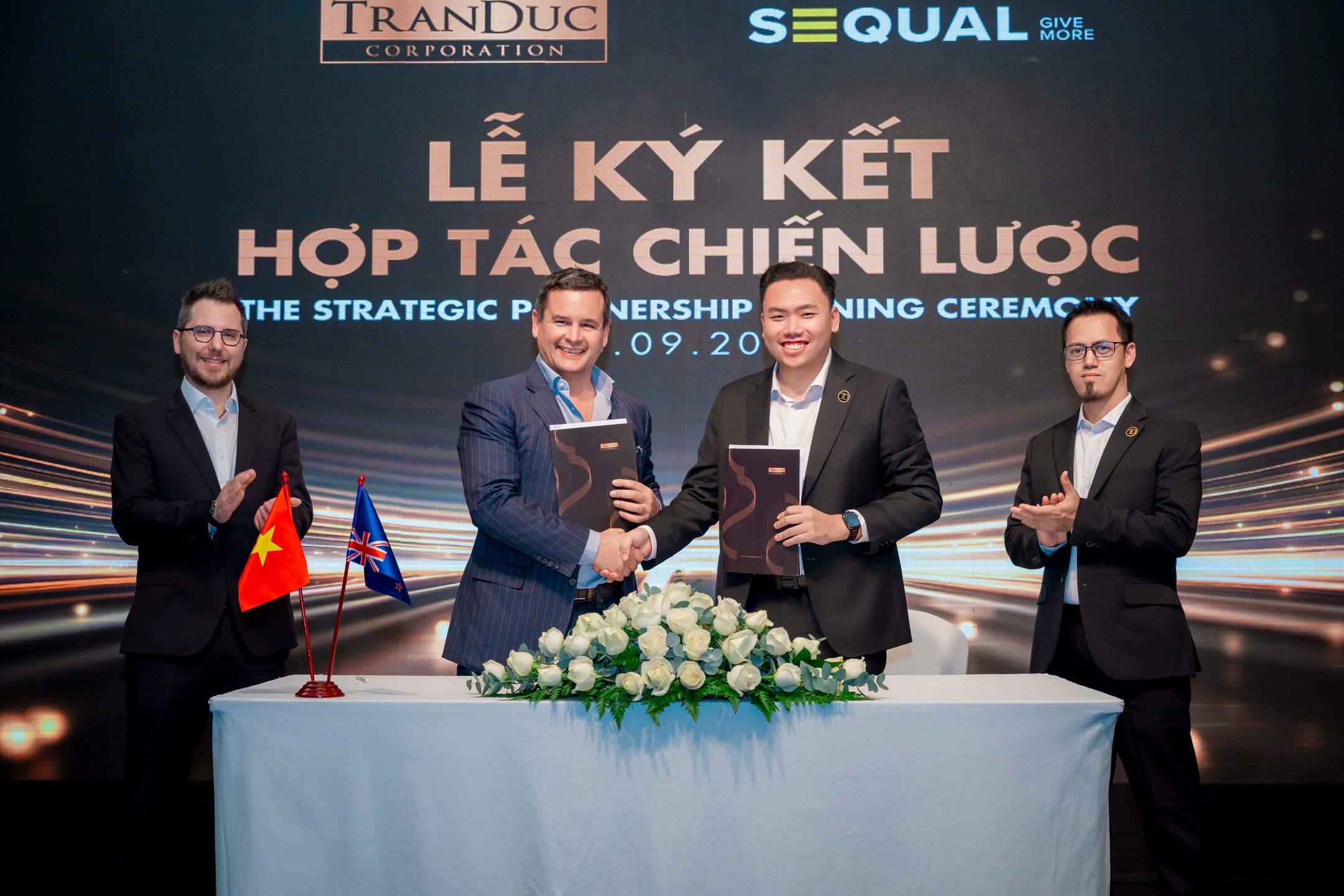
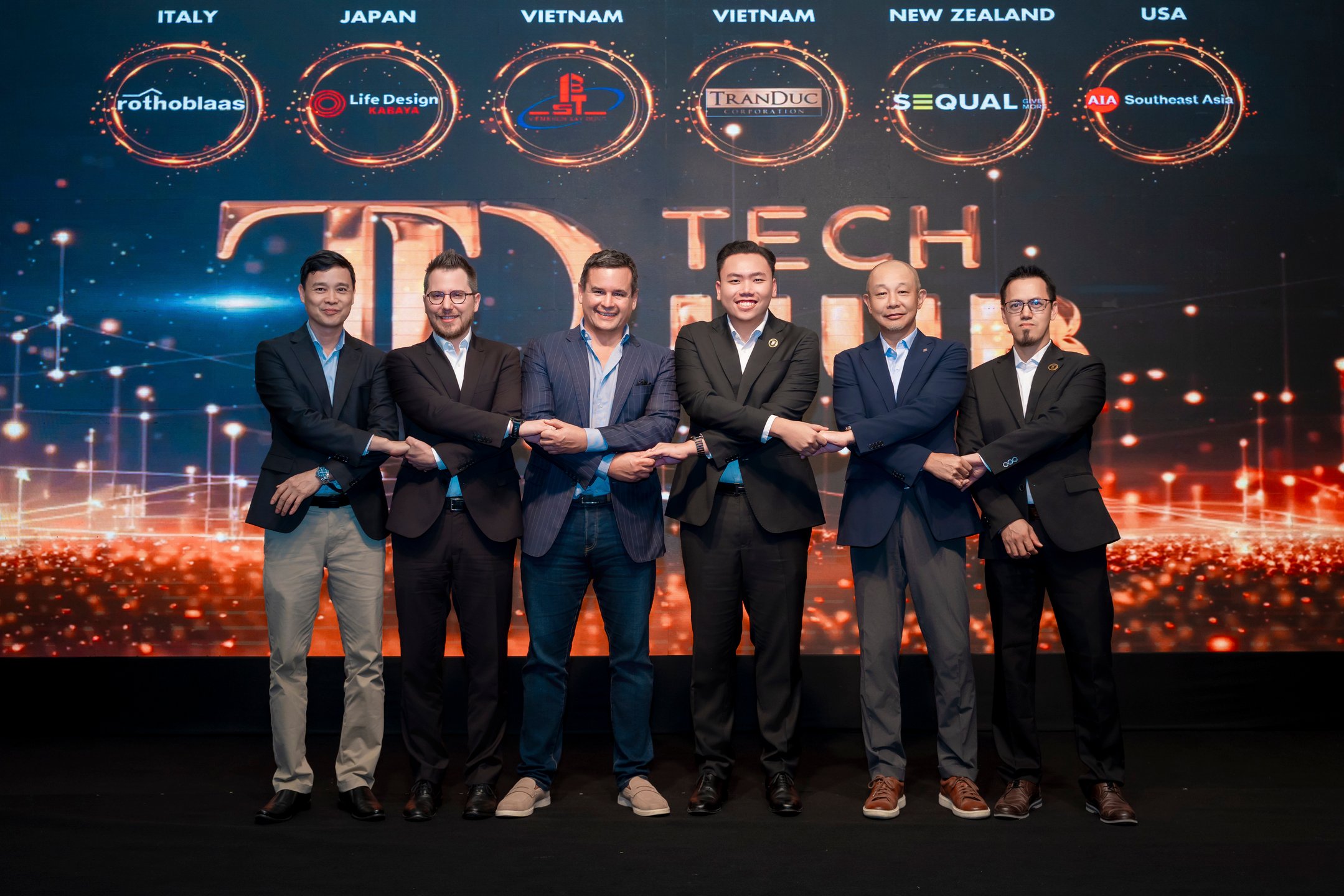
The advancement of TD Tech Hub in its effort to comprehensively connect raw materials and manufacturing with practical applications
Also at the event, TranDuc and DB Group — founder and developer of Ecopark — signed a cooperation agreement aimed at researching the feasibility of applying timber structures in suitable projects. This is a further step toward connecting research, standards, and production capability with real-world deployment needs.
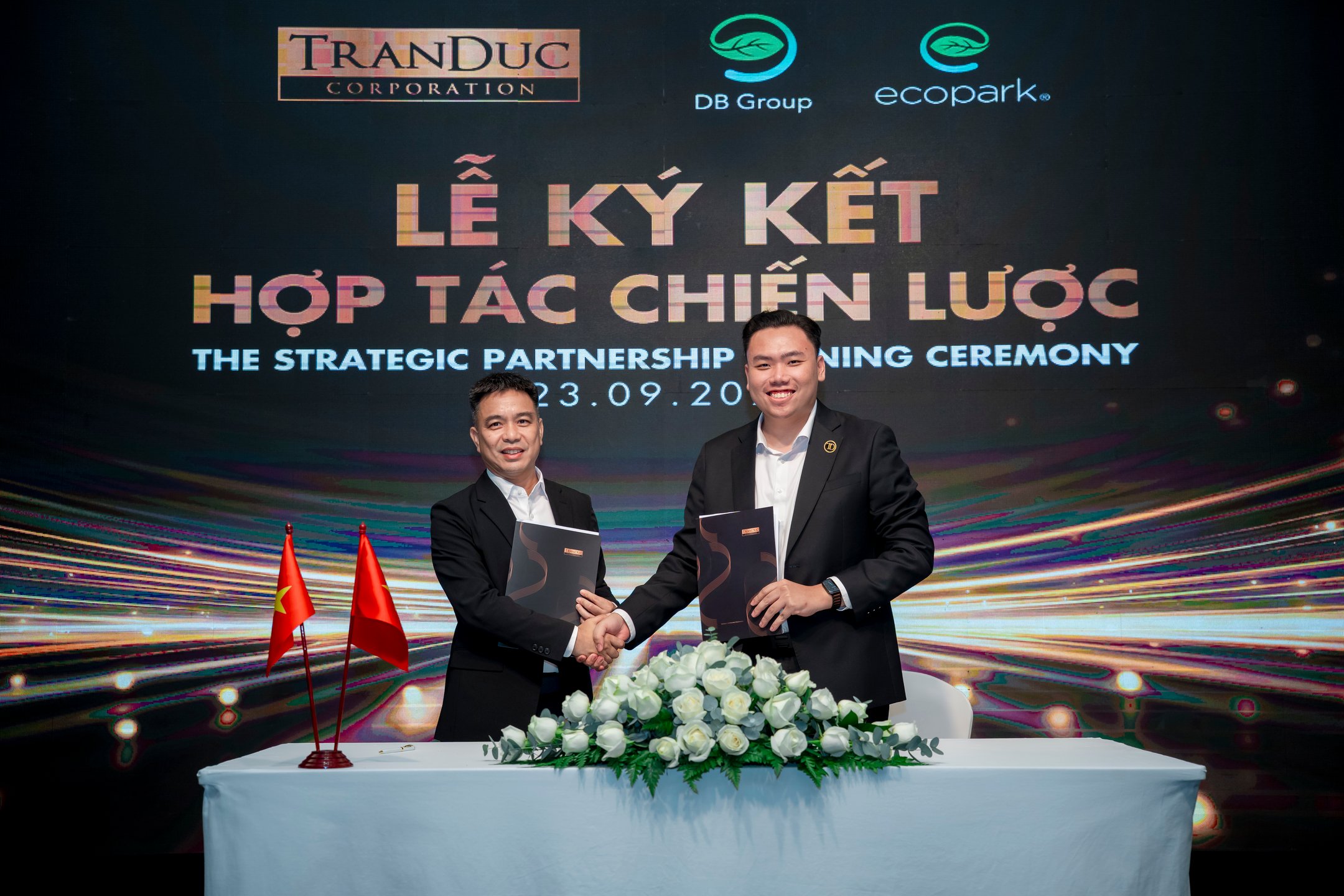 Aiming to bring Mass Timber into practical application, Tran Duc officially signs a strategic partnership with the founder of Ecopark and DB Group
Wood is not a new material in Vietnamese architecture. What is changing is how it is now being approached — through data, testing, standards, and modern manufacturing technology.
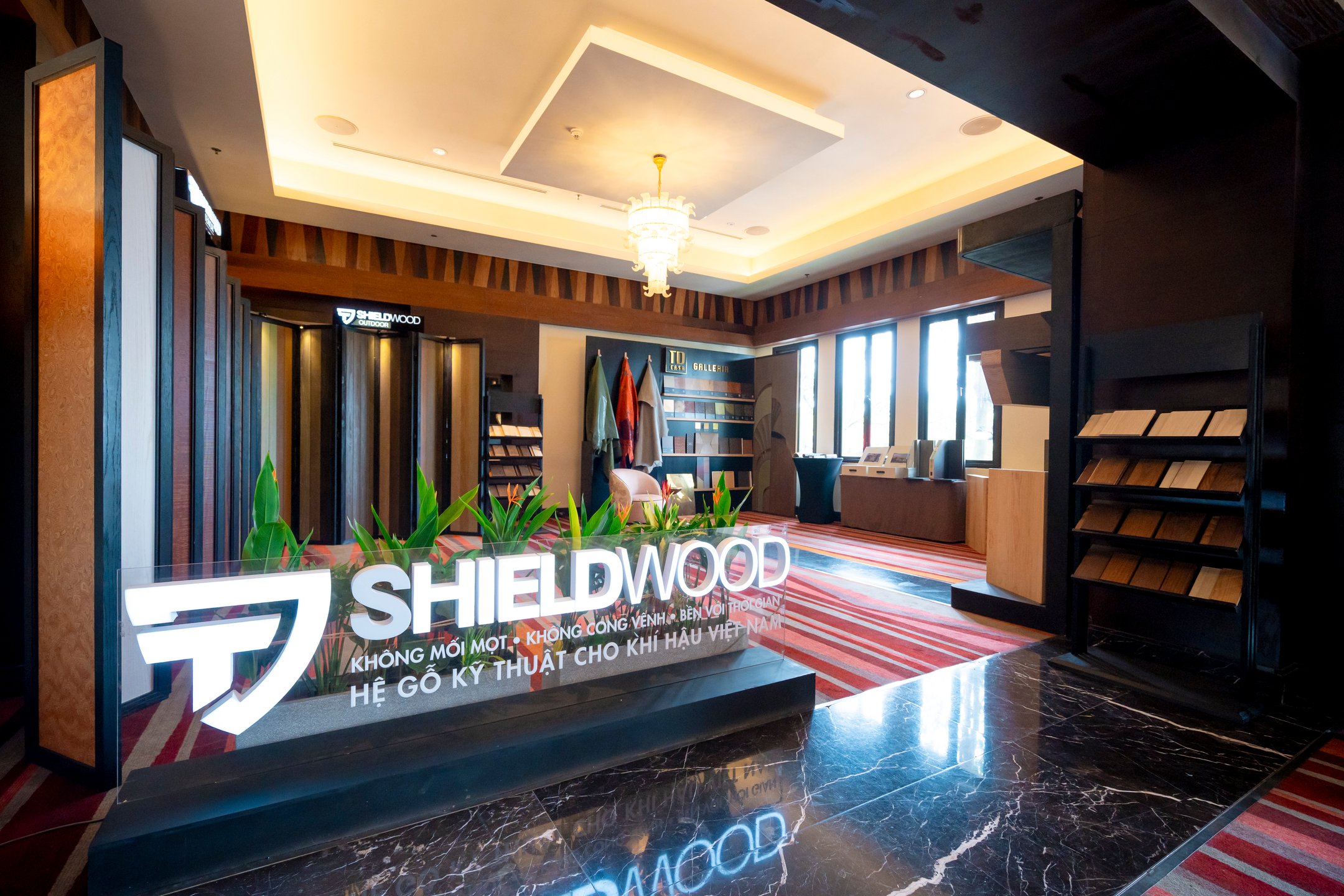
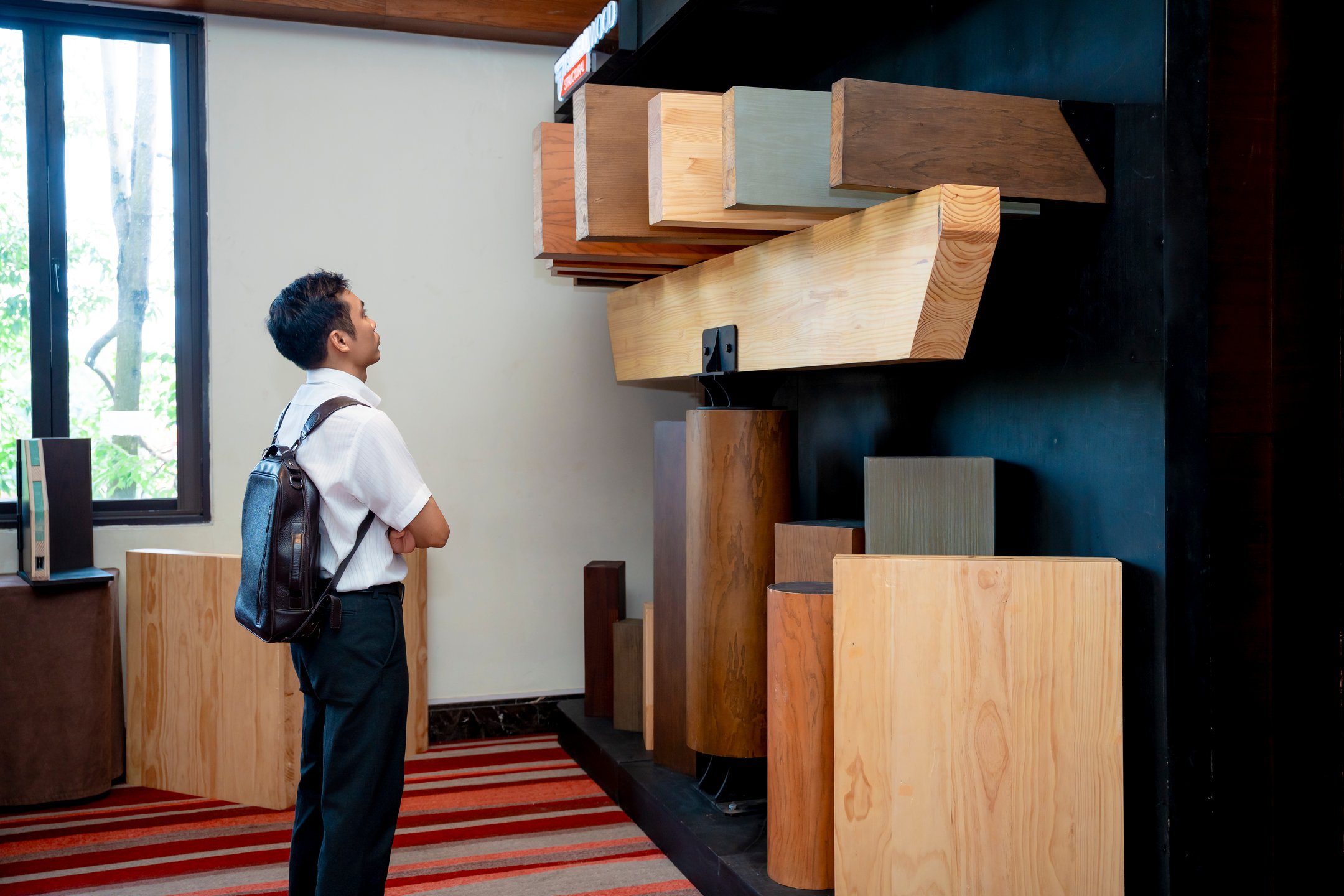
The two workshops on September 23 therefore told a story beyond the capacity to produce CLT or Glulam. More importantly, they represented a step in the journey toward building the foundation for timber structures to travel from factory to drawing, and from drawing to building.