TRANDUC EXPANDS RESEARCH ON ACACIA TIMBER APPLICATIONS IN CONSTRUCTION AT IUFRO ACACIA 2026
Within the framework of the IUFRO Acacia 2026 International Conference in Hanoi, TranDuc Corporation shared its strategic direction for developing Vietnamese acacia timber into high-value-added building materials and structural components. Backed by an industrial manufacturing platform and ongoing research and testing initiatives, the company aims to bridge domestic raw material resources with engineered wood processing technologies and the practical application demands of the construction industry.
Held from October 5–8, 2026, the IUFRO Acacia 2026 International Conference, themed "Sustainable Development of Acacia Plantations in a Changing World," gathered approximately 200 delegates from 16 countries, including scientists, research institutions, regulatory bodies, and enterprises operating in the forestry and wood processing sectors.
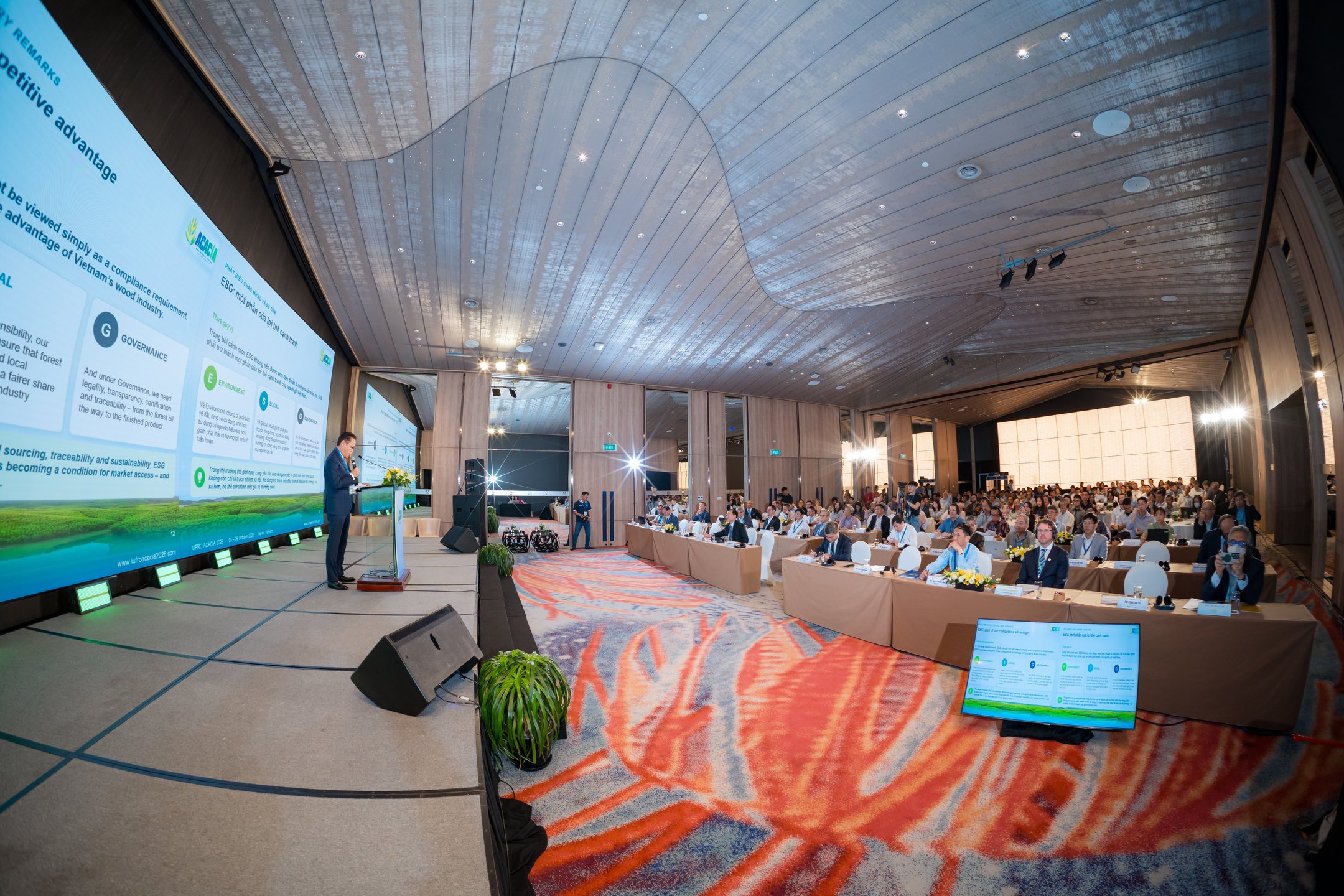 Overview of the IUFRO Acacia 2026 International Conference in Hanoi, bringing together approximately 200 delegates, including scientists, research organizations, and enterprises from 16 countries.
At the conference, Arch. Nguyen Huy Hien – Director of Development & Strategy at TranDuc Homes – delivered a presentation titled "From Furniture to Timber Architecture – Opening a New Value Chain for Vietnamese Acacia," introducing TranDuc’s approach to expanding acacia applications from traditional processed products to materials and structural components for construction.
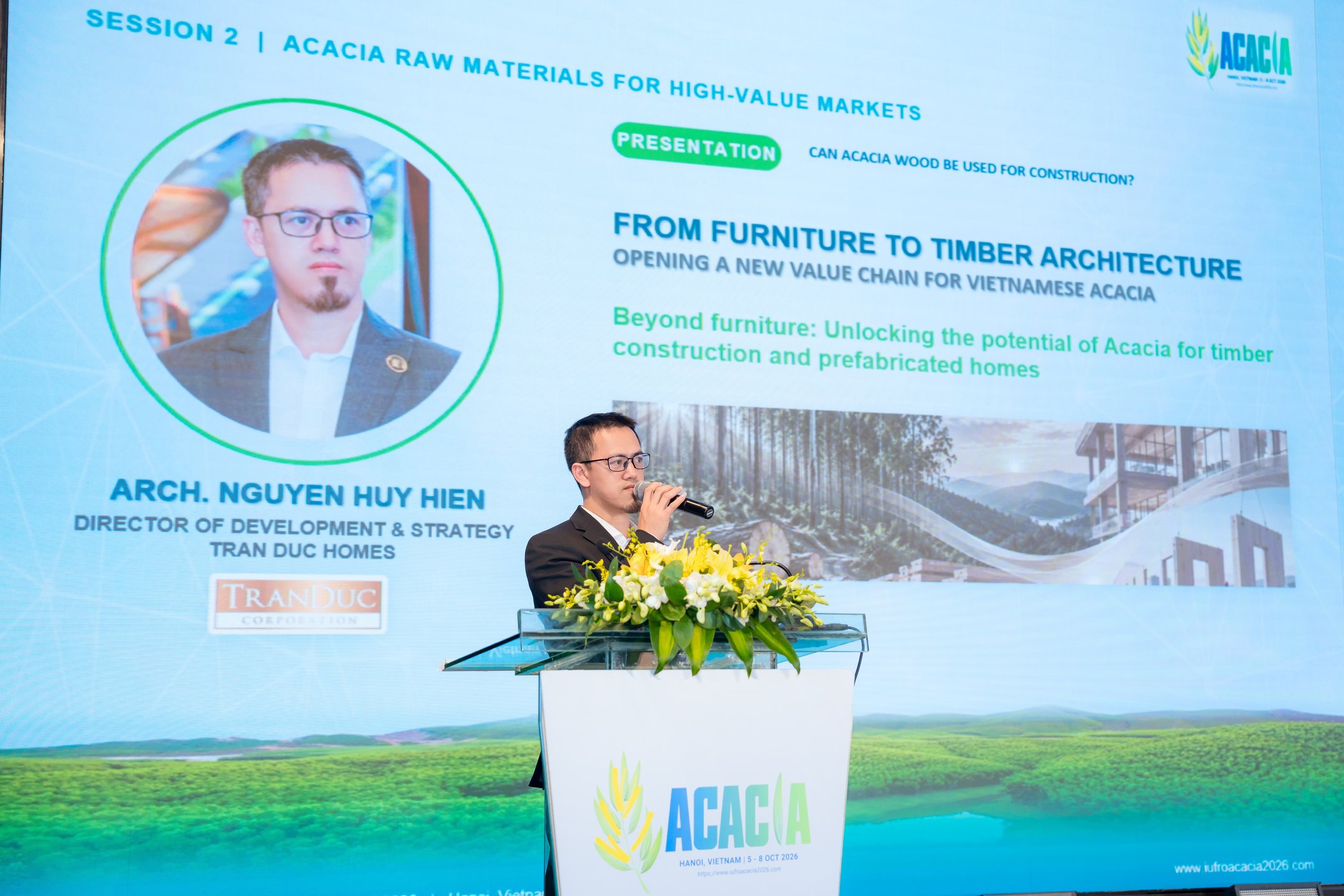 Arch. Nguyen Huy Hien – Director of Development & Strategy, TranDuc Homes – presenting the topic "From Furniture to Timber Architecture – Opening a New Value Chain for Vietnamese Acacia" at the conference.
Expanding the Application Potential of Vietnamese Acacia Timber
As one of the vital raw material sources for Vietnam's wood industry, acacia is currently widely used in the production of woodchips, engineered panels, and furniture. With advancements in engineered wood processing technologies, this resource holds significant new potential for applications in the architecture and construction sectors.
Technologies such as Finger Jointing, Glulam (Glued Laminated Timber), and CLT (Cross-Laminated Timber) enable the machining and bonding of smaller timber sections into larger structural components, expanding the utilization of raw materials for construction products with stringent technical requirements.
However, for acacia timber to be adopted in building structures, manufacturing technology must be accompanied by a comprehensive data system covering material properties, strength grading, load-bearing capacity, durability, and relevant design and certification standards.
This is the exact direction TranDuc is pursuing: developing acacia not merely as a processed product, but advancing it into a building material backed by a clear technical foundation—one that can be researched, engineered, and verified in real-world applications.
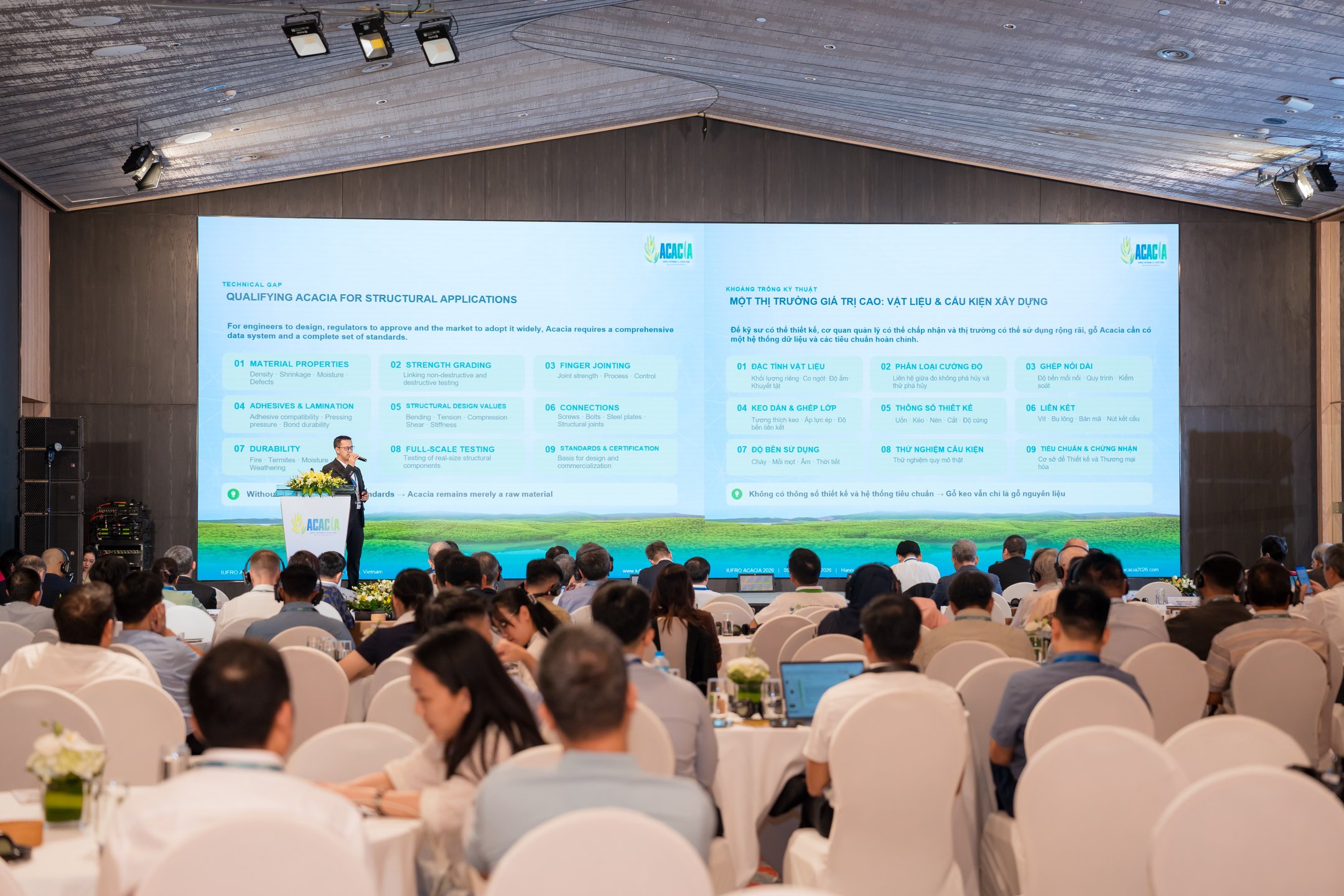 TranDuc's representative analyzing the requirements for material property data, strength grading, and technical standard systems necessary to qualify acacia timber for structural applications.
From Manufacturing Capability to Building Material Research
Drawing on extensive experience in engineered wood, structural components, and modular housing manufacturing, TranDuc is progressively expanding its research into the application of Vietnamese acacia.
The enterprise possesses a robust industrial manufacturing platform with an annual capacity of 50,000 m³ of engineered timber components and 2,000 modular homes, equipped with advanced technological systems for processing, fabrication, and quality control at an industrial scale.
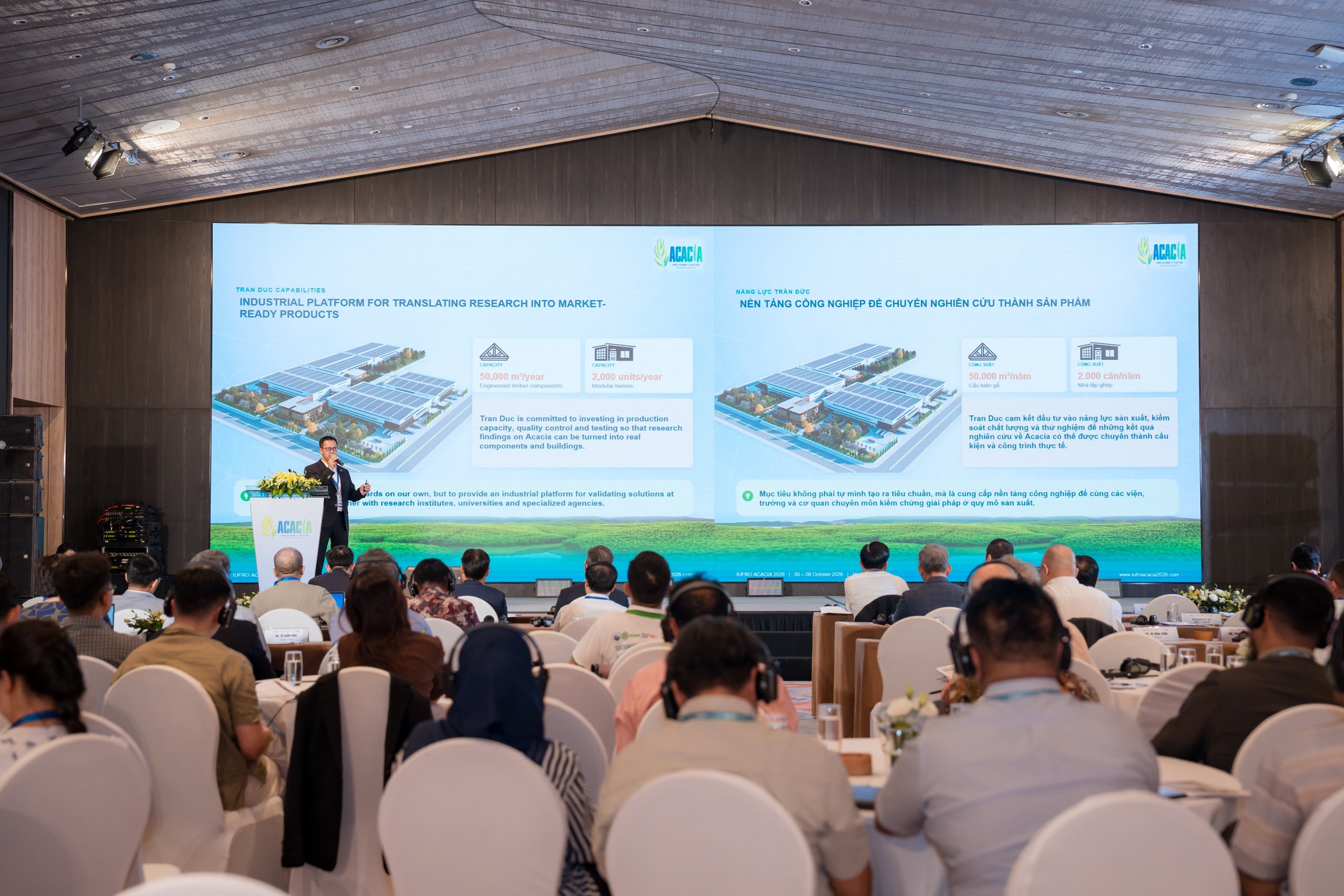 TranDuc’s industrial manufacturing platform with an annual capacity of 50,000 m³ of engineered timber components and 2,000 modular homes—serving as the foundation to translate research findings into market-ready products.
Building on this foundation, TranDuc has initiated testing on the viability of Vietnamese acacia in structural building applications, focusing on kiln drying, grading, finger jointing, lamination, and machining processes.
In parallel with domestic initiatives, the company is actively consulting and engaging with international research networks. Timber samples have been sent to laboratories in Australia to evaluate termite-resistant treatment solutions. In Malaysia, TranDuc is in discussions with the Sarawak Timber Industry Development Corporation (STIDC) regarding research on the physico-mechanical properties and structural performance of acacia, while simultaneously exploring industrial processing and application practices in Indonesia.
These initiatives serve as preparatory steps to establish a technical database, assess raw material suitability, and develop solutions capable of being manufactured and validated in Vietnam.
Connecting Research with Real-World Building Applications
To introduce a new raw material into the construction sector, research must be closely integrated with testing, technical standards, and manufacturing capability.
At IUFRO Acacia 2026, TranDuc shared its vision for collaborating with research institutes, universities, specialized agencies, and industry partners to study acacia properties, test structural components, and progressively establish a technical framework for construction applications.
One of the proposed objectives is to develop a pilot building project utilizing Vietnamese acacia timber, thereby validating the material’s performance across design, manufacturing, assembly, and actual operation.
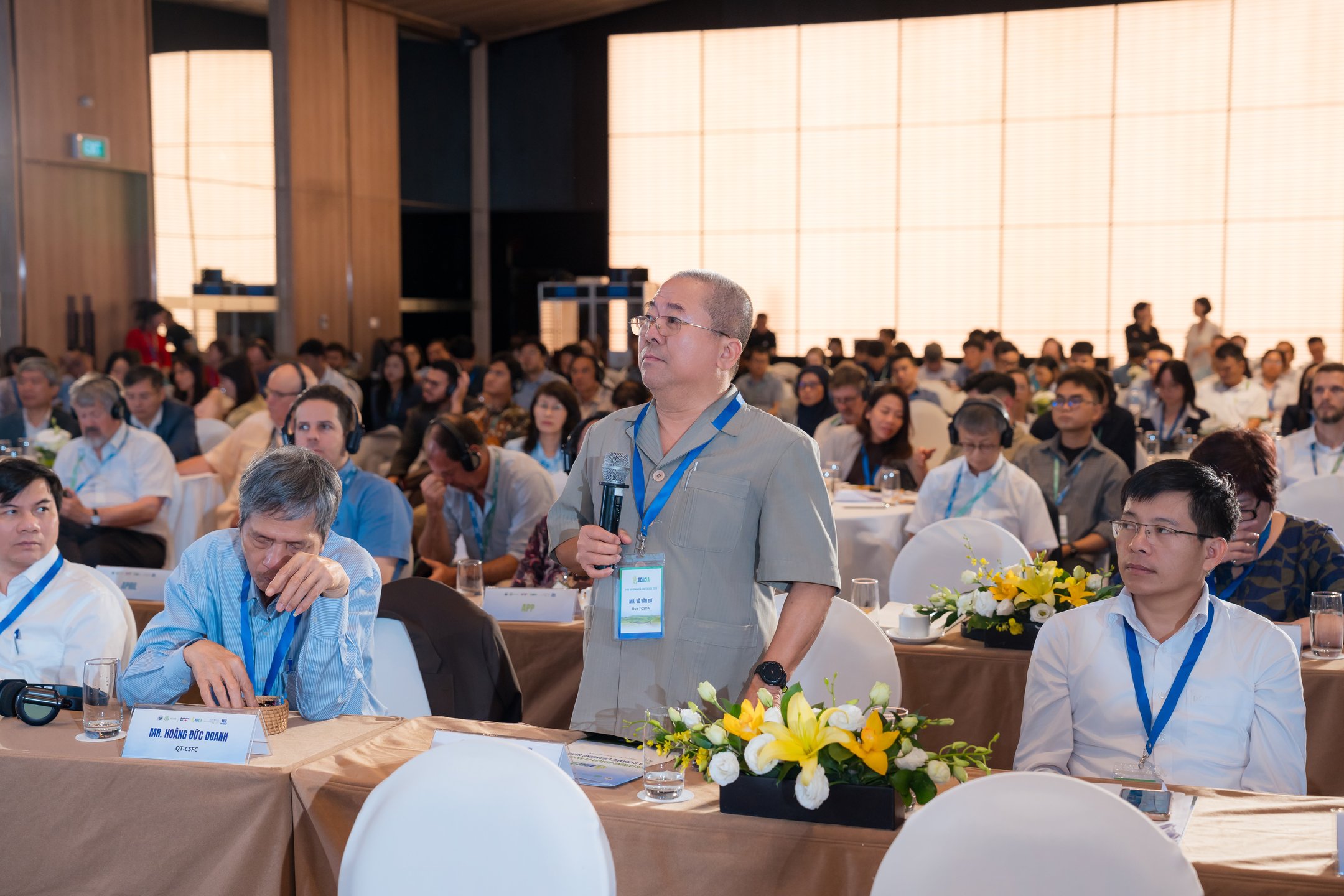 Experts and delegates exchanging insights at the conference on development potential, technical standardization, and value chain expansion for acacia raw materials.
As a manufacturing enterprise, TranDuc aims to contribute its industrial platform and execution experience to support the translation of research findings into viable structural components and building solutions.
This direction further broadens TranDuc’s approach to materials and industrialized construction: connecting raw material resources, processing technologies, technical standards, and practical execution capabilities.
Through IUFRO Acacia 2026, TranDuc reaffirms its commitment to working alongside research organizations and partners to unlock the higher-value potential of Vietnamese acacia, progressively expanding the application of engineered wood materials and contributing to the growth of sustainable construction.